
Education
Why Won’t My House Sell? Part 1
So you’ve listed your house for sale, your agent has come and taken photos, your listing is on the Internet, you have seen it in the newspaper and in the real estate magazines but you haven’t had a single showing. What’s wrong???

So you’ve listed your house for sale, your agent has come and taken photos, your listing is on the Internet, you have seen it in the newspaper and in the real estate magazines but you haven’t had a single showing. What’s wrong???
Well, if you’re selling in Auckland, I can tell you it’s probably one of three things:
- You’re priced too high
- Your house is not appealing to buyers
- Your agent is not marketing your house in the right places.
So, how do I tell if I’m priced too high? I’ve learned from my own experience as well as the feedback from buyers, sellers and agents all over Auckland that houses sell faster when they are priced competitively. Before you decide “competitive pricing” is pricing below comparable properties, understand that competitive pricing is listing for a price near what comparable properties have SOLD for recently.
Look at comparable properties and consider what criteria truly make that property comparable to yours. Basics like floor area, number of bedrooms and bathrooms and geographic proximity. If you have a two bedroom, one bath, 75 square metre home, it is not comparable to a four bedroom, two bathroom, 200 square metre home just because it’s only two houses down. Also, just because you own a 350 square metre home 40 kilometres from the closest town does not make it more valuable than a 120 square metres home in a suburban part of town 5 minutes from the commercial district. You need to ask your agent what features make your home comparable to others and only look at properties similar to yours.
Next, look at the SOLD price of those properties. It doesn’t matter what these people were asking for their houses, and it doesn’t matter what comparable properties that haven’t sold are listed for; all that matters is the bottom line – the sold price. If you price your home near that dollar amount, you are saying to buyers, “I am fair and reasonable” and buyers will be fair and reasonable also.
Lastly, when looking at these comparables, make sure they are homes that have sold recently. You should not consider homes that sold more than 6 months ago because an appraiser won’t and neither will your buyers when they decide what a fair and reasonable offer is. I don’t care that your house might have sold for $350,000 in 2005. You didn’t sell it in 2005, this is 2009. Let go of the past. If comparable properties are selling for $220,000 then your house needs to be priced close to that. Remember, the value of ANYTHING is only what an able buyer is willing to pay. If you are determined to list your home for more than 15% above what comparable properties are selling for, don’t waste your or your agent’s time. Wait it out, hang out for another 5-10 years when things are on a steady rise.
To be continued…
This has been adapted with permission from a post by Jessica Murr. Jessica Murr is a Realtor in Far Northern California specializing in luxury homes, ranch properties, real estate sales consulting, social media and networking, first time homebuyers, and real estate investment planning.





Education
What Makes A GREAT Investment Property?
Why do some property investors seem to be able to continually add to their property portfolio, whereas most buy a few properties and then can’t go any further? One of the main things that separates the really successful investors from the average investors is the properties they choose to buy.

Why do some property investors seem to be able to continually add to their property portfolio, whereas most buy a few properties and then can’t go any further? One of the main things that separates the really successful investors from the average investors is the properties they choose to buy.
Let’s have a look, then, at what makes a great residential investment property.
Firstly, what are the main objectives of property investors? The most common objective is something like this:
“To create a passive income stream to enable me to stop working if I wanted to… to enable me to retire comfortably so I can spend my time doing what I want.”
An ancillary to this primary objective would be to accomplish this without demanding massive risk or huge effort / stress in managing the properties.
Assuming that these are the objectives, then the following are qualities to look for in a superior investment property:
1. High income
- If your property covers all costs of ownership (the main ones being mortgage interest, rates, insurance and maintenance), it is not going to place great financial strain on your existing cashflow.
- If you want to grow a substantial portfolio, you can not have properties that place a strain on your cashflow, because that limits how many you can own.
- Over time, when rents increase, a property that covers its costs today, will produce a positive cashflow in the future, hence helping to grow your passive income stream.
2. High Tenant Demand Location:
- If the rent looks high compared to the price of the property, but it is located in an area that is unappealing to tenants, you will have periods of vacancy, which equates to periods of sleepless nights, which equates to “I’ve had enough of this property investment game – I’m out!!”…
- These frustrations are not what you need if you want to be successful!! If the property is in an area that is always appealing to tenants, you will easily be able to replace tenants when they leave… this amounts to sleeping at night, which we like!!
3. Fee Simple Title:
- A fee simple title is the best legal tenure you can get. With this type of property, you are in control of your asset. For example, you can improve it, extend it or alter it, as you please, without consulting with neighbours, Body Corporates (as with apartments) or common leaseholders (as with cross-lease titles), subject to conforming with the local council rules, of course.
- This is important because people (including us Kiwis) LOVE control. The more control and flexibility you have, the more control you have over your future and your choices, the more appealing the property is to LOTS of people.
- Therefore it will be easier to sell, and more likely to sell at a premium price, when it comes time to sell (including if you need to sell in a hurry, heaven forbid!). And there almost ALWAYS comes a time when you will want to sell.
4. Traditional Construction:
- People do not like things they do not understand. Investors especially like the tried and tested… they don’t want to experiment.
- Therefore, to make sure your property will appeal to the broadest range of potential tenants and purchasers in the future, make sure it is built in the traditional way… weatherboards, iron or tiled rooves, bricks… this is what us kiwis feel confortable with.
- If it has a 1990s-style monolithic style cladding system, many people will simply not consider it… don’t give yourself this disadvantage when it comes time to sell!!
5. Difficult to Replace / In Short Supply:
- If you are going to own an asset for a long time, you might as well own one that is most likely to increase in value faster than most… and this comes down to good old supply and demand.
- In a decent sized city, with an increasing population, demand for housing is increasing over the medium to long term. But it is much easier to increase the supply of some kinds of housing, than others, in order to meet this increasing demand.
- For example, in central or city fringe locations, the supply of apartments and townhouses is likely to increase dramatically in order to satisfy the demand for additional housing in these locations. This eases pressure on price increases (supply increasing to meet demand).
- On the other hand, the supply of free-standing houses in these locations, is really not increasing by much – IF AT ALL!! When you have demand increasing, and supply largely static, this tends to produce strong increases in prices.
- Therefore I recommend buying free-standing houses, rather than apartments or townhouses.
IN SUMMARY
If you can buy a free-standing property, with a fee simple title, in a high demand location, built using time-tested construction methods, with a strong cashflow (say 7.5-8.0% gross yield or even more if possible), then you are in PROPERTY INVESTMENT HEAVEN!!
Now don’t get me wrong – I never said it was EASY to find these types of properties… and you may have to compromise one or more of these criteria, but if it was easy, EVERYONE WOULD BE RICH!!! And last time I checked, not everyone is rich…
So now for my shameless plug for a GREAT investment property that I happen to be selling!!!
Education
Important Facts about Minor dwellings
Building a minor dwelling on an already existing title significantly boosts the return of a property through both rental earnings and capital appreciation however an awareness of council regulations is essential.
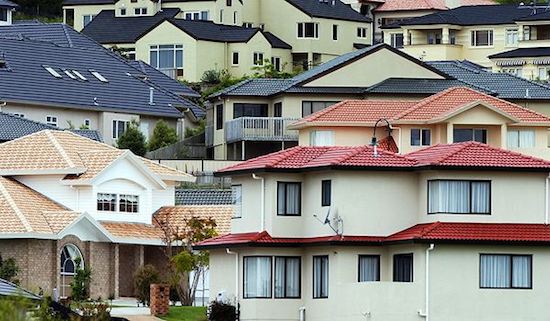
Its first prize win at last year’s Master Builder ‘House of the Year’ Awards with a home in the $250 000-and-under category has firmly established Investor Homes as an exceptional New Zealand building company.
While gaining success as the only wholesale building company in New Zealand, Investor Homes has also drawn recognition from its minor dwellings.
Minor dwellings are secondary units which can be built on already existing titles.
Once called ‘granny flats’ and built for extended family or aging parents, minor dwellings today are a modern and cost-effective alternative to pricey subdivisions while providing an excellent investment opportunity.
Whereas subdivisions can easily cost $70 000 per lot, minor dwellings provide a way around this.
Stuart Shutt, director of Investor Homes, has seen the ‘two-house return for the price of one-and-a-half’ on numerous projects, such as a recently completed minor dwelling on the rear site of a rental home in Henderson, West Auckland.
“After purchasing a four-bedroom house for $242K, my client spent $15K renovating it and rented it out for $400 a week.
At the same time he invested in building a three-bedroom minor dwelling on the property for $150K (turn-key including all council costs) which he rented for $340 a week.
In total $407K was spent on the property. The value of the property went up to $500K in six months with a build time of only ten to twelve weeks.” So a $93k capital gain and a positive income!
Building a minor dwelling on an already existing title significantly boosts the return of a property through both rental earnings and capital appreciation however an awareness of council regulations is essential.
Building a minor dwelling in a suburb of Manukau or North Shore City, for example, is possible as long as it only takes up 60m², or 65m² in West Auckland.
Investor Homes encourages people to act on potential investment based on numbers and sound advice that covers each aspect of minor dwelling projects, from location to products and plans.
Offering a huge range of minor dwelling plans and prices, some of which can be viewed on their website http://www.investorhomes.co.nz, Investor Homes also offers informed investment advice concerning minor dwelling projects.
“We recently worked with a woman living on a property with a sloping backyard that was hard to mow and difficult for the kids to play on,” says Stuart.
“We created a minor dwelling strategy that saw something which was costing her money turned into a goldmine.
“Minor dwellings a very safe form of development – you can sell it for a profit, or if for some reason you can’t sell, you’re left with a positive income.”
Education
Transition under the Unit Titles Act 2010
Once the UTA 2010 commences, there are transitional arrangements that apply for 15 months. This is a short summary of the options, useful for a body corporate secretary/manager.

Once the UTA 2010 commences, there are transitional arrangements that apply for 15 months. This is a short summary of the options, useful for a body corporate secretary/manager.
- Body corporate rules – a body corporate can either keep its existing Schedule 2/Schedule 3 rules or elect for the rules to be replaced with the operational rules under the UTA 2010 (awaited in Regulations) and section 138 (which contains the new repair and maintenance responsibilities). In making this choice a body corporate will need to consider:
* the role of the secretary – under the UTA2010 now one of the service contractors to the body corporate
* committee make-up, appointment and procedures – is the body corporate ready for the change?
* AGM procedures – again, is the body corporate ready for the change?
* existing body corporate rules – are the existing rules all covered in the UTA 2010 and new Regulations, do the existing rules remain appropriate of not, are there any ultra vires issues that need resolving in the rules? A review of the rules will be needed and consideration given to what, if any, additional rules should be put in place.
* repair and maintenance – is the body corporate ready for the additional responsibilities under section 138 and has it been budgeted for? - Long term maintenance plan – a long term maintenance plan will be required at the end of the transitional period. The only decision therefore is when to start. A body corporate might consider delegating this to the committee to get it ready in time.
- Long term maintenance fund – a body corporate has a choice whether to set up this fund or not. The UTA 2010 will require it at the end of the transition unless a body corporate has opted out by special resolution.
There are many other provisions that need to be considered when the UTA2010 is first passed. In following posts I’ll cover this, including what would be a useful agenda for a first AGM.
In terms of these transitional arrangements, watch the timing. A first AGM will need to be convened within 6 months of the UTA2010 being passed. The transitional arrangements above apply for 15 months from the first day of the month following the UTA2010 commencing. In general body corporate meetings are needed once every calender year and not later than 15 months after the previous one. If the decisions above are not covered in the first AGM then the following AGM might be too late and the default position will apply, or an extraordinary general meeting could be convened to get the necessary resolutions passed.
-
 Management5 years ago
Home Insulation Requirements
-

 Investment5 years ago
Another date NZ property investors are dreading
-
 Build5 years ago
How to Choose and Purchase a Suitable Property to Subdivide
-

 Accounting & Finance5 years ago
Low Interest Rates Winners and Losers
-
 Management6 years ago
Attracting More Business Travellers To Your Auckland Airbnb Property
-
 Investment6 years ago
Would You Be a Landlord in 2018?
-
 Tenants6 years ago
Coworking Countdown – 4 Things to Prepare Before You Move In
-
 Renovations6 years ago
Five easy steps to boost the appeal of your home